
'We eat first, they later; we sit on chairs and they on the floor; we call them by their names and they address us by titles,' writes Tripti Lahiri, author of Maid in India.

Here's a round up of some information the nation learnt from Parliament on Tuesday.

By agreeing to form the government in New Delhi, Arvind Kejriwal has taken a gamble where his reputation has been put on mortgage. Rediff.com's Sheela Bhatt looks at the road ahead for Kejriwal and his Aam Aadmi Party.
A number of studies and statistics prove that marital rape is a reality in India. But laws that do not acknowledge this are another reality that a large number of married women are forced to live with.

'Who would have thought that Brexit would take place or Donald Trump would become US president or Kim Jong-un's madness could bring the prospect of nuclear war over Asia?' 'It is the time of the unexpected; the French elections should perhaps be seen in this perspective,' says Claude Arpi.

"They would say, 'Look at these modern women. If someone puts a hand on their shoulder, they cry sexual harassment'. I became the butt of everybody's jokes." Read on to find out more

'India's economy is growing faster compared to the developed economies of the world.' 'More importantly, it is growing faster compared to most of the developing economies.' 'The monsoon is not the only thing that drives the rural economy and certainly not the national economy.' 'It is too simplistic to reduce everything to the monsoon.'

'Voting also involves communal factors, caste factors and so on, but increasingly, the caste factor is making less and less sense to the Indian voter,' says journalist and author Manu Joseph.

Purvi Patel is the first woman in America to be sentenced to prison for foeticide. Chaya Babu/Rediff.com reports on the verdict and the ripples of shock and fear it set off.

Here's your weekly digest of the craziest stories from around the world.
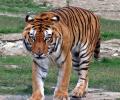
'We are rushing to 'develop' without carefully valuing natural areas.' 'With careful land use planning and scientific zonation at least 5 to 10 per cent of the country's land can be secured for tigers and other such species, and another 5 to 15 per cent kept under low-impact uses to support biodiversity that can coexist with human uses.'
